
At Art in Site, we see the environment as part of the care team and so, just like developing a medical service model, our art, interiors and wayfinding projects require extensive consultation to be effective.
With a multitude of stakeholders - not least a complex commissioning body, multi-disciplinary design team, potentially a charitable funder here or there - it’s complicated before we even consider a conversation with a patient, carer or member of the clinical team.
So it goes without saying that healthcare interior design doesn’t begin with colour palettes or furniture specs: it begins with conversations. Lots of conversations.

The Art of Engagement
Art in Site was founded with the vision to help hospitals give their patients better experiences. As a team we work with clinical teams, patients and families to understand the difficulties and challenges of each service, and collaborate creatively to solve them using the skills, materials and budget available in each instance.
Co-creation is key - both to the successful implementation of art, design and wayfinding, and to building a community and identity around a healthcare service.
Below is our guide to structuring a successful engagement process, including:
- What to consider when planning the process, and
- How to hone in on the insights that could make your project truly transformative.
No items found.
Information gathering, understanding and validation
For clinicians and Trusts embarking on construction or refurbishment projects, the engagement process can feel daunting: as a team, you’re faced with a maze of competing voices, conflicting needs, and budget constraints that can feel hard to reconcile.
Engagement
To undertake engagement successfully, we need to ask ourselves a number of key questions at the outset. Before we put pen to paper on a proposal or open up our sketchbooks, we need to know what is important - and why.
No items found.
Taking a strategic approach
Stakeholder engagement isn’t simply about gathering opinions; it's about extracting insight that will shape design decisions for the better.
This process requires careful planning, starts before any design work commences and continues throughout the project lifecycle. Once people are engaged in the process, they need to see their input flow through the project - from concept to completion - and, of course, in post-occupancy evaluation.
Being heard is important; seeing your voice shape design decisions is empowering.
So how do we do this?
Practicalities
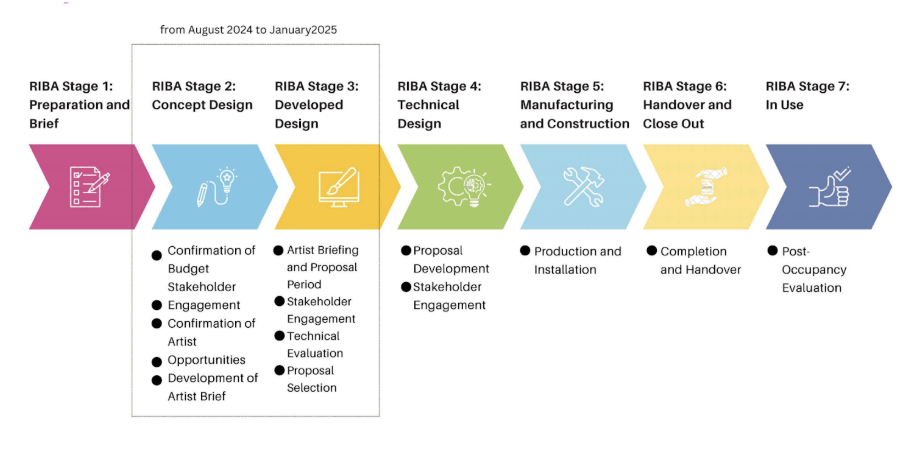
A typical arts engagement process runs through RIBA Stages 2 and 3.
No items found.
Five steps to successful engagement:
1 Build a framework for discovery.
Identify what we want stakeholder input to inform. What are we asking and why?
Having defined goals will help engagement sessions stay focused, but this shouldn’t stop new ideas flowing through, or shut the door to innovation or inspiration.
2 Identify who needs to participate?
Consider who you need to consult and the breadth and depth of engagement that’s possible with these groups or individuals within the timescales of the process.
Be mindful of circumstances: participating patients, families and carers might be navigating recovery, living with complex care needs or mourning the recent loss of a relative - all of which require sensitivity and skill to manage.
3 Agree the format(s) for engagement.
Decide what format the engagement process will take. Different structures (and processes) work for different user groups and some user insights might best be gathered in 1-2-1 sessions rather than group workshops.
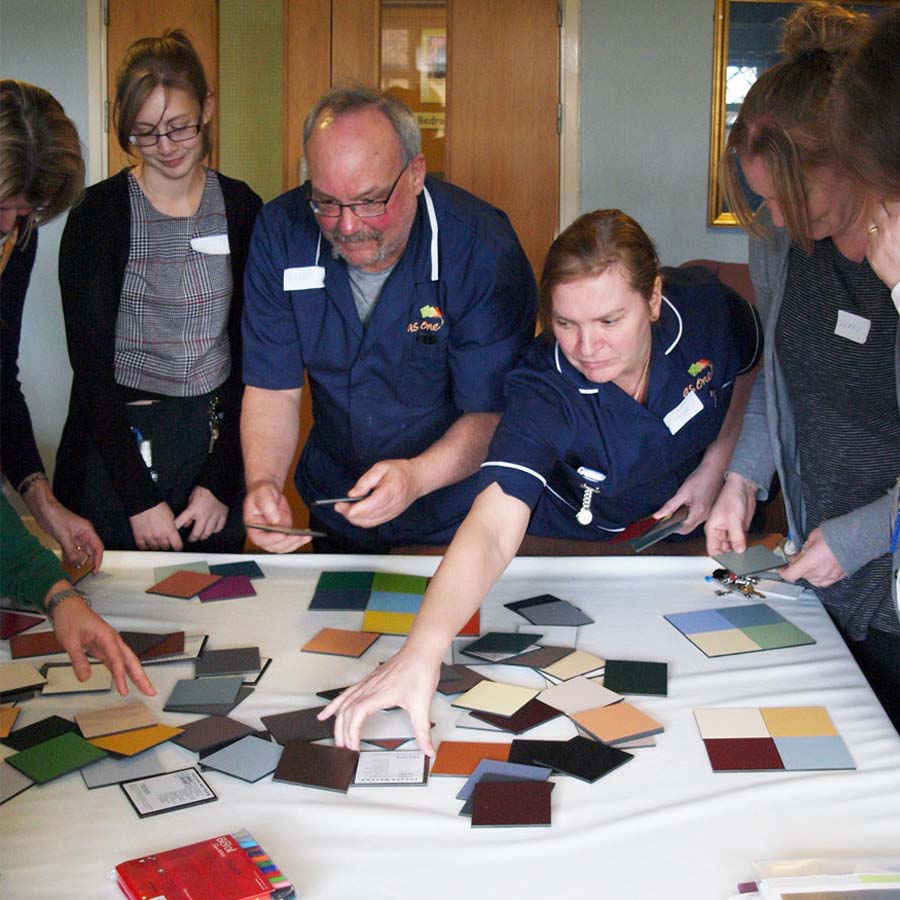
Examples include, art workshops for children and young carers to understand how spaces should feel; online user group sessions to understand how spaces should be used and life size cardboard mockups for clinicians to test how they work in reality.
Timing matters profoundly. Both for individual contributors on their personal patient/carer journey and for the process itself. Engage too early and it can be challenging for stakeholders to visualise possibilities; engage too late and their input risks being either tokenistic - or simply slipping through the cracks under pressure.
Input needs to be meaningful and realistic - so participants clearly understand the role they play in the process and the difference their contribution can make.
4 Map your audience and objectives to your methodology.
Staff focus groups work well for understanding operational workflows. Patient shadowing and journey mapping reveal experiential insights that questionnaires miss entirely. One-to-one interviews with individuals who have specific needs - such as those living with dementia or visual impairment - provide depth that group settings cannot achieve. A robust engagement strategy employs multiple methods, recognising that different voices emerge through different channels.
5 Show you’re listening.
Sharing updates regularly helps keep consultees and the wider community up to speed and most importantly, shows that you are listening and consultees have been heard.
Providing feedback is key. This could be via dedicated feedback sessions (in-person or virtual, 1-2-1 or 1-2-many) and through project websites/blogs and vlogs.
In the example of Evelina London Children’s Cancer Services - one of our current projects - a ‘you said, we did’ style website charts the engagement journey and lessons learned.
This process encourages good governance, ensuring feedback is tracked, evidenced and accessible if needed for the planning and approvals process.
No items found.
No items found.
No items found.
‘Leaning in’ to the outliers
The temptation in engagement is often default to the obvious: senior clinicians, ward managers, and articulate patient representatives.
While of course, these voices matter, they represent only a fraction of those who will ultimately use the space. And, just as in any other sphere (academics in higher education are a really good example here), experienced user wants and needs tend to focus on a newer, shinier version of what they had before, rather than thinking differently about how spaces are used; the workflows and processes engaged and how the experience ‘feels’ to patients, carer/family members and clinical teams.
That’s where our ‘outliers’ come in.

No items found.
No items found.
Among patients, look beyond those currently using services. Former patients bring perspective without the vulnerability of current treatment. Patients with complex needs - those who visit frequently, stay longest, or navigate multiple services - possess invaluable insight into how spaces interconnect and where systems fail.
Consider different age groups too: children notice details adults miss and can articulate needs that parents might filter or overlook and respond differently to visual and digital stimulation.
Families and carers represent a constituency often marginalised in healthcare design, yet they spend extensive time in these environments. They understand the (grim) reality of waiting areas, the challenges of overnight stays, the importance of privacy during difficult conversations, and the need for respite spaces.
They're also attuned to wayfinding challenges and accessibility issues that affect their ability to support their loved ones effectively. Small details that can make a big difference.
Among staff, hierarchies can silence important voices. Healthcare assistants, porters, cleaning staff, and administrative teams interact with the physical environment differently than consultants. They notice maintenance issues, understand traffic patterns, and identify practical problems that emerge in daily operations. Night staff experience spaces entirely differently than day staff. Include them.
Clinical staff across disciplines should be represented, not just those in the specific department being redesigned. Radiographers, physiotherapists, occupational therapists and mental health liaison teams, all bring specialist knowledge about how patients with different needs experience healthcare environments.
No items found.
“Art in Site have been a pleasure to work with. Their innovative and exciting approach to working with Artists and their considered process of working with staff and patients have been key to delivering a cohesive environment.”
Dr John Criddle, Senior Paediatric Consultant
"93% of children said artwork made them feel safe.”
Independent evaluation, Evelina London Children’s Hospital

No items found.
No items found.
At Art in Site, we take a flexible approach to engagement, drawing on a range of techniques and methods including 24-hour observations, workshops and play, that allow us to engage with any kind of group, including those with complex or special needs. It's an approach that delivers results too and one which we look forward to showcasing over the coming months.
No items found.
To find out more, contact us here.
No items found.


