
Sitting in a public engagement session for a new hospital build I heard something that stopped me in my tracks. “We used to love this hospital!". I looked around - really?
It’s a classic low-profile endless-corridored hymn to utility with a clean orthogonal layout, lots and lots of glass, blue panels and hardwood handrails - looking a bit tired now, after 50 years - a bit unloved.
My guess is the most powerful organising principle in its original design were metrics and statistics of demand, not love. The same will go for the hospital that replaces it.
During the tea break I asked her to tell me more (she lived locally and had worked 30 years as a housekeeper in the hospital). She and her friends, colleagues, patients and co-workers felt that when the hospital was new, it was the best, the most modern, but above all, it was theirs.
My guesses are that this love for the hospital lasted a bit longer than it took for the decor style to look old fashioned, and that the love probably didn’t return when mid-century modern came back into vogue - it just didn’t feel like theirs any more … they had lost their connection to it.
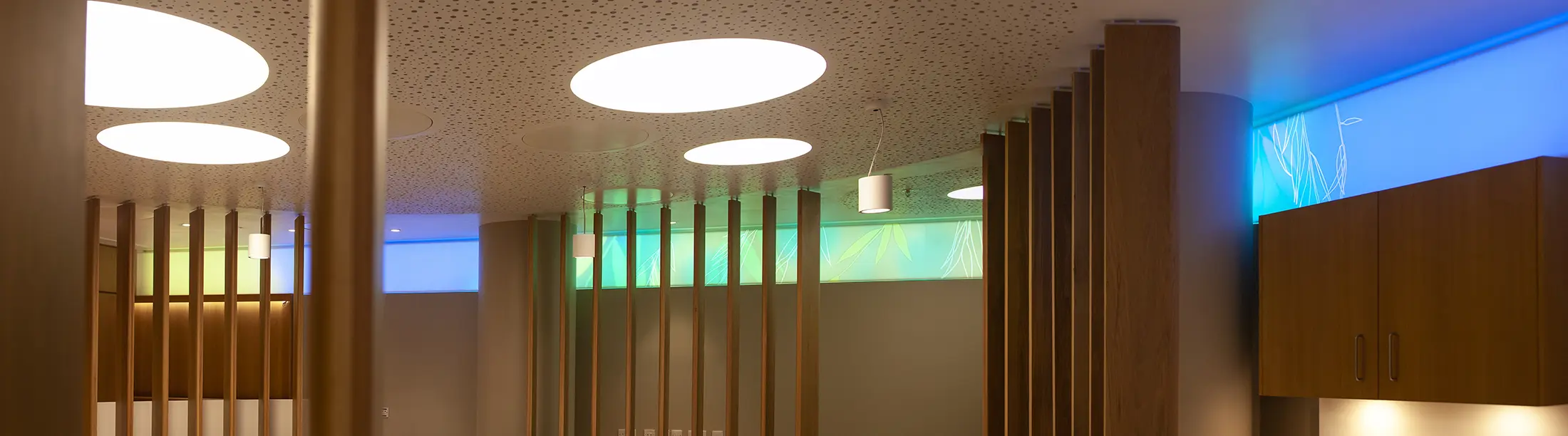
I was there to talk about art. Could art help?
Maybe, they said, but they wanted the art to be true to them, true to their landscape, true to their community concerns.
A man joined the conversation: “make it all white inside, but make sure every room has a window to our beautiful landscape”. Everyone turned to look out of the window as the sun set. The landscape was theirs.
As an artist I believe ‘true’ art can help. It can create an emotional connection; helps people be present in both space and time. To do this it must also be true to the artists’ personal concerns, process, meaning, content and intent. If it isn’t, it doesn’t ring true.
And aesthetics? Aesthetics draw on our senses, influencing our perception of space. (is it calm, or is it confusing?) Good aesthetics wrap both arms around art, and collectively, help patients, clinicians and carers, feel safe.
No items found.
No items found.
Why art and aesthetics matter
I’ve always been abit of a tree hugger. In the past I’ve been accused, (quite rightly) of attending more closely to how something I’m making feels, before focusing on utility (or even feasibility). I’ve dealt with it over the years by consciously pausing at a very early stage of the design process, taking a deep breath and spending time thinking: ‘how is this going to work?’ - not only for me - but for a host of other people looking over my shoulder.
"My heart is a lute suspended,
As soon as it is touched, it resonates."
Robert Louis Stevenson | Essay: “On the Enjoyment of Unpleasant Places”
No items found.
Engagement as a Tool to Unlock Creative Potential
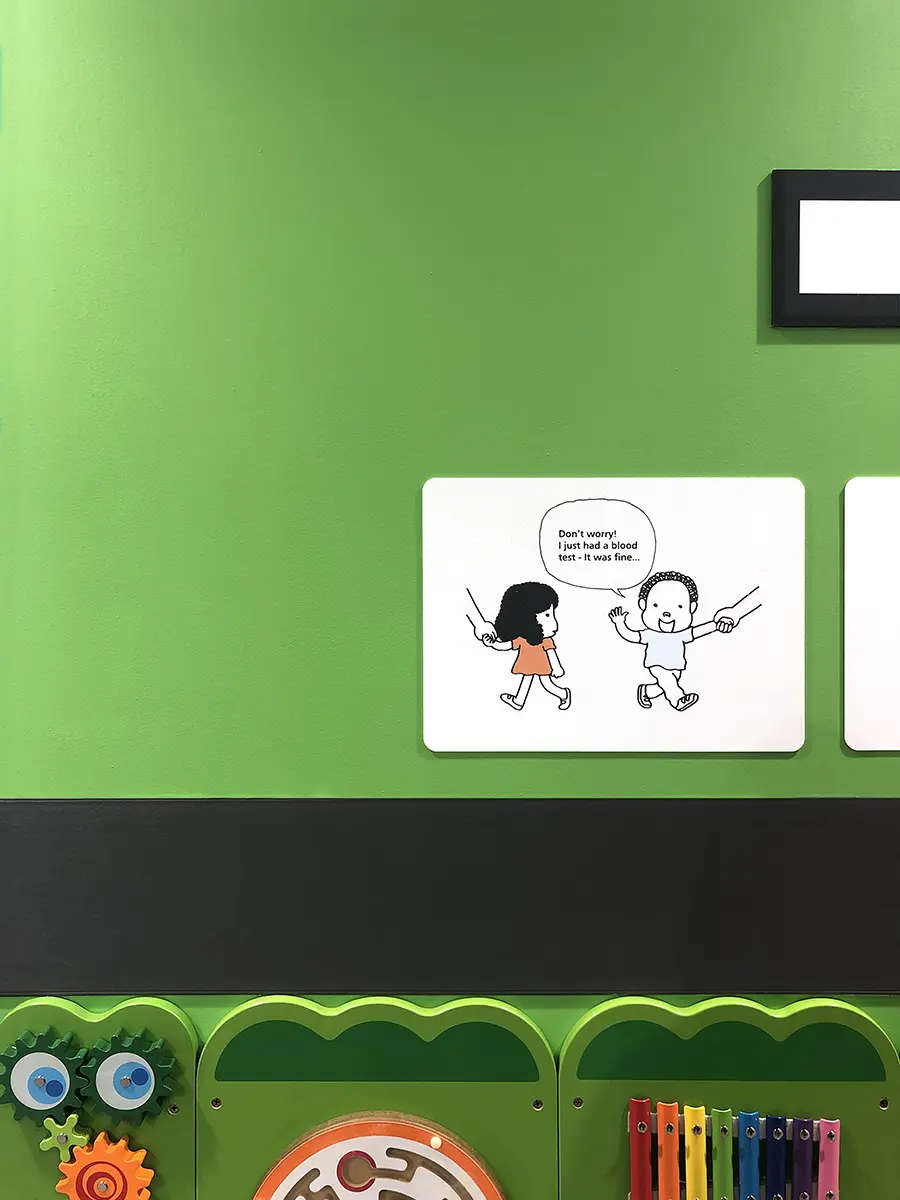
It’s a big queue of people, and each needs to be listened to with the utmost respect: patients, their relatives, the person who might have to fix it if it gets broken, the cleaner; the person with impaired vision or with different sensory, cultural or cognitive experiences of the thing I’m proposing.
Now, more than ever, the person who wants to know how to fill out the spreadsheet that ascribes a return on investment, also counts.
It’s important to think of all these connections as friends and collaborators, not the opposition.
Together we can make something beautiful.

No items found.
Aesthetics: A Critical Component of Care
Too often when conversation turns to aesthetics in the context of a hospital construction project, it’s described as a ‘nice to have’, ‘an enhancement’ (or in one memorable instance an “embellishment.”)
When I hear these descriptions, I recall a series of conversations I had with Max Jonas - a thoughtful, articulate consultant anaesthetist from Southampton University Hospital’s Intensive Care Unit - who asked us to look at ways that art works could help with the rehabilitation of patients recovering from an induced coma.
Max was convinced that sensory stimulus, linked to the natural forms and rhythms of light, was key - not only to waking people up - but to helping them deal with the confusion, disorientation and even paranoia that afflicts people when they regain consciousness.
No items found.
No items found.
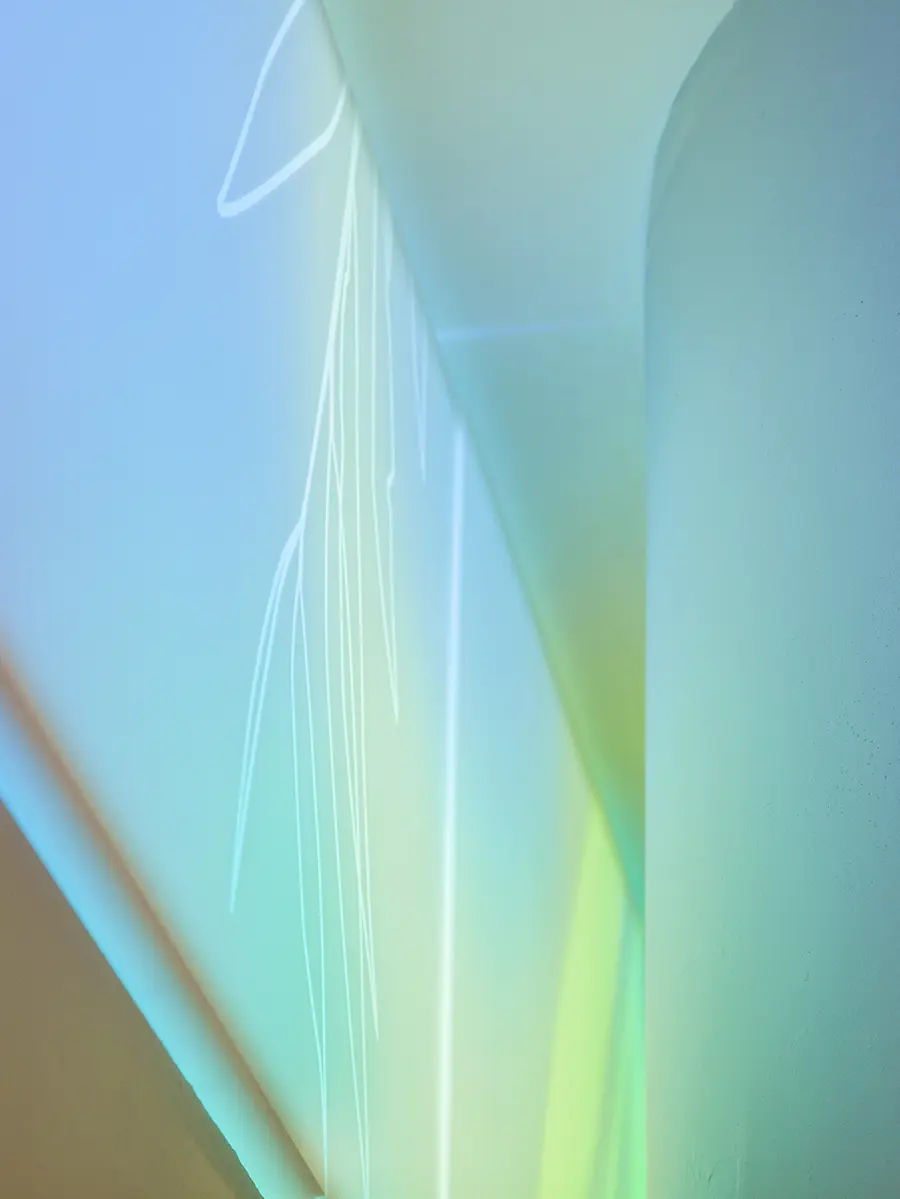
We prepared a set of artworks that emitted gentle light, enhanced natural light and gently changed intensity and colour temperature through the day and night. We even designed an artwork that mimicked the little patch of light that illuminates the windowsill when the sun hits it obliquely, for a ward that had no direct daylight.
Of all clinicians, anaesthetists understand that consciousness is not an on-off switch.
What Aristotle and Kant meant when they talked about aesthetics was “understanding the world through the senses”. In other words, aesthetics is not only fundamental, but unavoidable. The lute in your heart will resonate, in harmony or jarring discord come what may.
The etymological opposite of ‘aesthetic’ is not ‘ugly’ - and it’s not ‘tasteless”. It is numbness … ‘without sensation’.
Things have moved on a bit from when the term (and the job) were first unveiled to the world in 1846 by Oliver Wendell Holmes Sr. FMRI data shows that low level sensory information is being transmitted to the brain, even under anaesthesia.
Being knocked out and coming to from a dose of Propofol is not being killed and brought back to life - it’s less a temporary removal from ‘understanding through the senses’ - more a blurring of memory and a forgetting of context. (What happened? Why am I here?)
Aesthetics then, is a living ‘connection with the world.
So, when someone says: “aesthetics are a nice to have,” aren’t they mistaken?

No items found.
No items found.
Isn’t any decision we make, as designers, builders, or people of influence, whether that decision is motivated by compassion, taste, ergonomics or economics, an aesthetic decision?
Driven by militant demand from patients whose sensitivity to sensory experiences makes a ‘normal’ utilitarian environment disturbing (even traumatising), policy and legislation has moved towards inclusion, softening and humanising a temporary hospital ordeal.
I’m worried that in the current mood for decision making driven by metrics, 'un-measureables' like aesthetics are more and moreprone to the red pencil.
I’ve heard it said that hospitals in the future will be ‘quick in, quick out’ places… but what about people who need to stay longer in hospital?

And what about the staff, who work 12 hour shifts there? Isn’t enduring an ordeal, even for one day, stressful? Isn’t stress bad for your health? Does gritting your teeth lead to good interactions with a clinician?
An Aesthetic Call to Arms
Isn’t it time to let go of the fallacy that it’s only architects that are responsible for aesthetic decisions? Or only the artists,for heavens sake?!
Shouldn’t aesthetics be considered at every level of decision-making?
I believe there’s no such thing as a neutral aesthetic, but I do believe there are bad aesthetics. We sometimes have bad aesthetics in hospitals,but they are not inevitable.
As Sindre Aarhus Narvestad puts it: “We might optimise a building for performance, but we forget the emotion. We design for compliance and not for attachment, and when beauty is removed from the equation, buildings become temporary by default.”
We all love the brand new, but buildings don’t stay brand new for long.
So where do we start?
Max Jonas started with the patient’s experience of light falling upon them - a gentle waking up stimulus we feel even with our eyes closed. Art that emits or evokes or reflects gentle light might be an answer.
Others, like Gerd Sortland, a senior Mental Health OT professional for NHS North London Mental Health Trust believe that ‘energy shift’ is the key - we need aesthetic glimmers to remind us that we can shift our energy from negative to positive; that we can look out for things that give our lives meaning, and live less in our own heads. Art can help, because shifting energy is what art does.

No items found.
“True pleasure in any location, however harsh, comes from within, through shifting perspective and seeking out beauty in small details, like a lull in the wind or a sheltered nook, rather than the place itself.”
Robert Louis Stevenson | Essay: On theEnjoyment of Unpleasant Places”
No items found.
There are other places to start – each hospital has its own context that lives alongside the metrics of modern medicine.
As professionals listening carefully and working together, we can create artwork that evokes psychological and emotional glimmers: that genuinely shows we care.
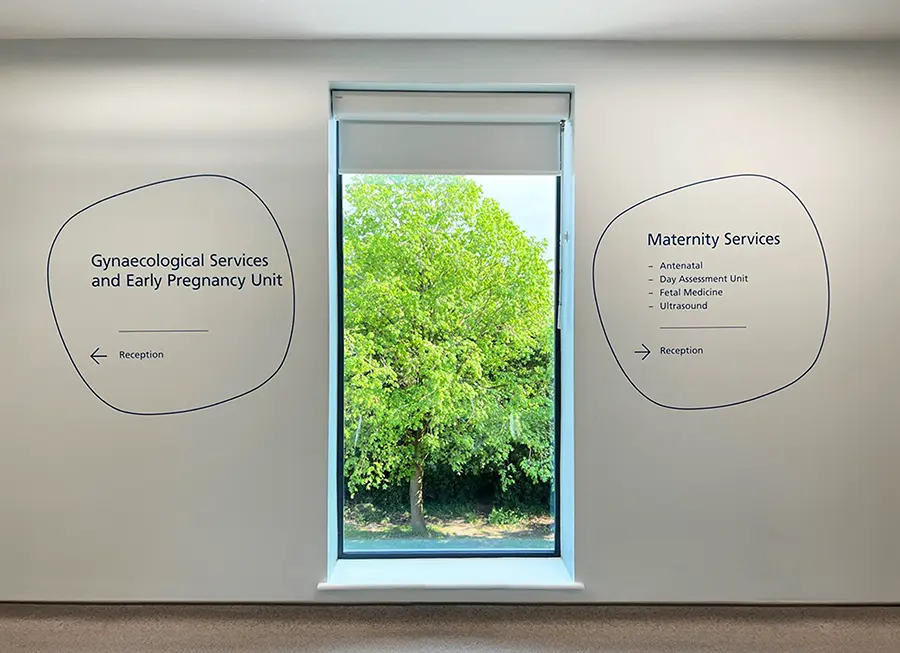
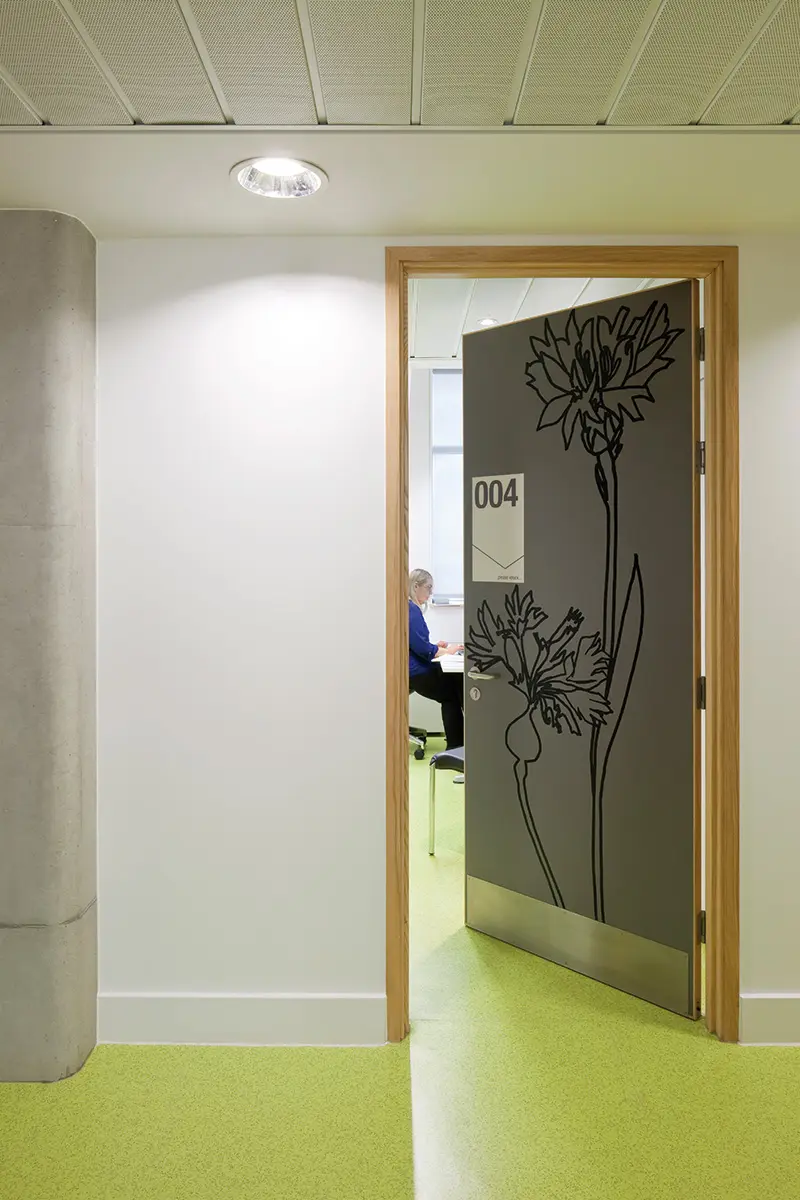
In just the same way, well designed signage shows we understand what it is like to be lost; careful placement helps banishes doubt. Seating can support both emotionally as well as physically as a patient or carer prepares for an examination, operation or update from a clinician.
No items found.
Aesthetic: The Clinician's Choice
Many of the enquiries we receive at Art in Site come directly from clinicians.
Clinicians who are thoughtful about their practice are a joy to work with, and that’s because every good clinician is both an educated technician who knows the significance of a heart rate or a white blood cell count, but also an expert in context - the whole patient - not just the data.
Doctors have their own queue of people to attend to – their queue is in front of them, not behind – and clinicians know that each member of that queue is an individual with a history and a place in their family and community, a childhood and an imagination. All of this must be considered: the mystery and meaning in what we experience, not just the metrics.
True art is aesthetics given, felt and understood and it is beyond words. In this way, it’s like love. That’s why people get angry when they’re disappointed by art that isn’t true; doesn’t create that connection. Please let’s not reduce art in hospitals to a glib formula or kick it down the project timeline until it’s too late to do anything good and true.
Let’s pay it some attention.
The word beauty should not be taboo because it only makes sense in context and cannot be reduced to metrics. We must not leave it too late to listen to the queue of humans looking over our shoulder: those people are the context in which beauty is made.

No items found.
To find out more, contact us here.
No items found.


